

The rapid rise of digital assets has sparked widespread debate over their compliance with Islamic jurisprudence. As cryptocurrencies like USDT and various tokens become increasingly integrated into everyday commerce, everyday users face critical questions regarding the validity of transactions conducted with them.

In light of these developments, a prominent Islamic scholar has clarified that cryptocurrency is not considered property under Shariah, making cryptocurrency purchases and subsequent resales impermissible. Mufti Muhammad Taqi Usmani, president of Wifaq-ul-Madaris Al-Arabia Pakistan and Darul Uloom Karachi, has issued an official legal decree (Fatwa) regarding the use of cryptocurrency in buying and selling goods.
What the Fatwa Says
The fatwa declares that, based on expert opinions gathered so far, cryptocurrency is not considered Mal (property or wealth) under Shariah. Instead, it is described simply as a record of notional numbers in an account.
The following is the complete translation of this official ruling addressing a specific inquiry regarding the use of cryptocurrency to purchase physical books and digital educational courses.
Important Note on Translation Accuracy:
Please note that this document has been translated with the assistance of artificial intelligence. While we have taken every precaution to ensure that the exact technical meaning, Islamic legal terminology, and context are accurately preserved, translations can occasionally omit subtle nuances. If you notice any phrasing that appears incorrect or could be improved, we kindly ask you to inform us in the comment section below. We will carefully review your feedback and make any necessary corrections.
The Official Decree (Fatwa) Translation
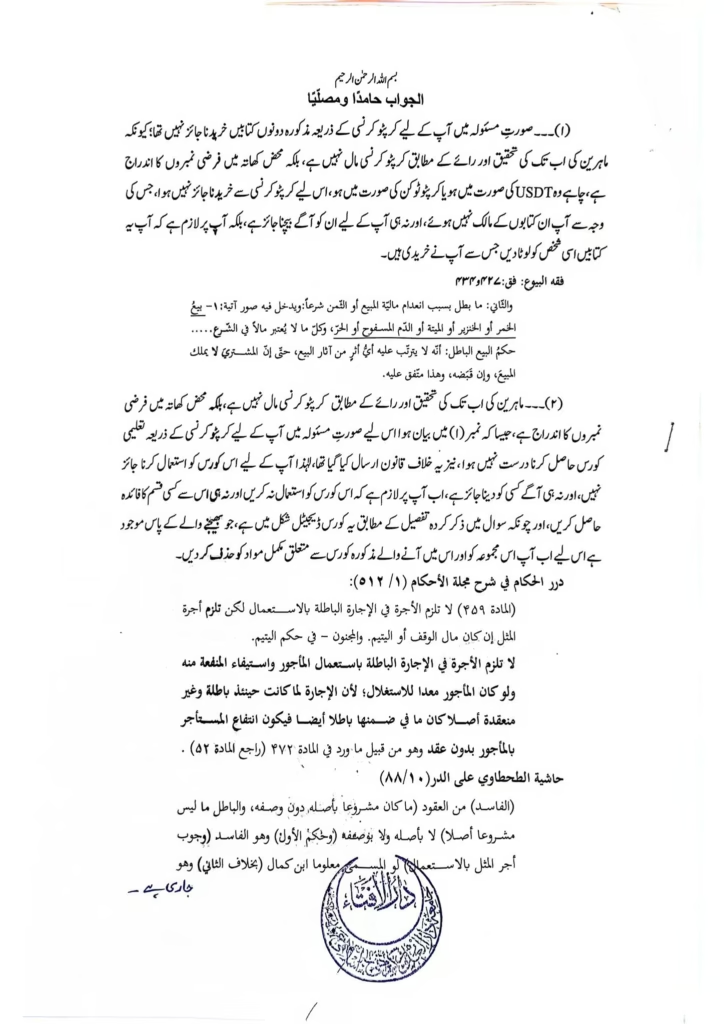
Part 1: Ruling on Purchasing Physical Books with Cryptocurrency
بسم الله الرحمن الرحيم
الجواب حامداً ومصلياً
(1) — In the questioned scenario, it was not permissible for you to purchase the mentioned books through cryptocurrency; because according to the research and opinions of experts so far, cryptocurrency is not considered wealth (Mal). Rather, it is merely an entry of imaginary numbers in a ledger, whether it is in the form of USDT or in the form of a crypto token. Therefore, purchasing with cryptocurrency is not valid, due to which you have not become the owner of these books, nor is it permissible for you to sell them further. Instead, it is mandatory (lazim) upon you to return these books to the person from whom you purchased them.
فقه البيوع: فق: ٢٤٦ و ٢٤٧
والثاني: ما بطل بسبب انعدام مالية المبيع أو الثمن شرعاً؛ ويدخل فيه صور آتية: ١- بيع الخمر أو الخنزير أو الميتة أو الدم المسفوح أو الحرّ، وكلّ ما لا يُعتبر مالاً في الشرع…..
حكم البيع الباطل: أنه لا يترتّب عليه أيّ أثر من آثار البيع، حتّى إنّ المشتري لا يملك المبيع، وإن قبَضه، وهذا متّفق عليه.
Fiqh al-Buyu’ (Jurisprudence of Sales): Vol. 1, p. 246 & 247:
“The second type: That which is void (batil) due to the non-existence of financial value (maliyyah) in the item sold or the price from a Shariah perspective. Included under this are forms such as: selling wine, swine, a carcass, or spilled blood, and everything that is not considered wealth (Mal) in Shariah…
The ruling of a void sale (Al-Bay’ al-Batil) is: that absolutely no effects of a sale apply to it, to the extent that the buyer does not own the sold item, even if they have taken possession of it. And this is agreed upon.”
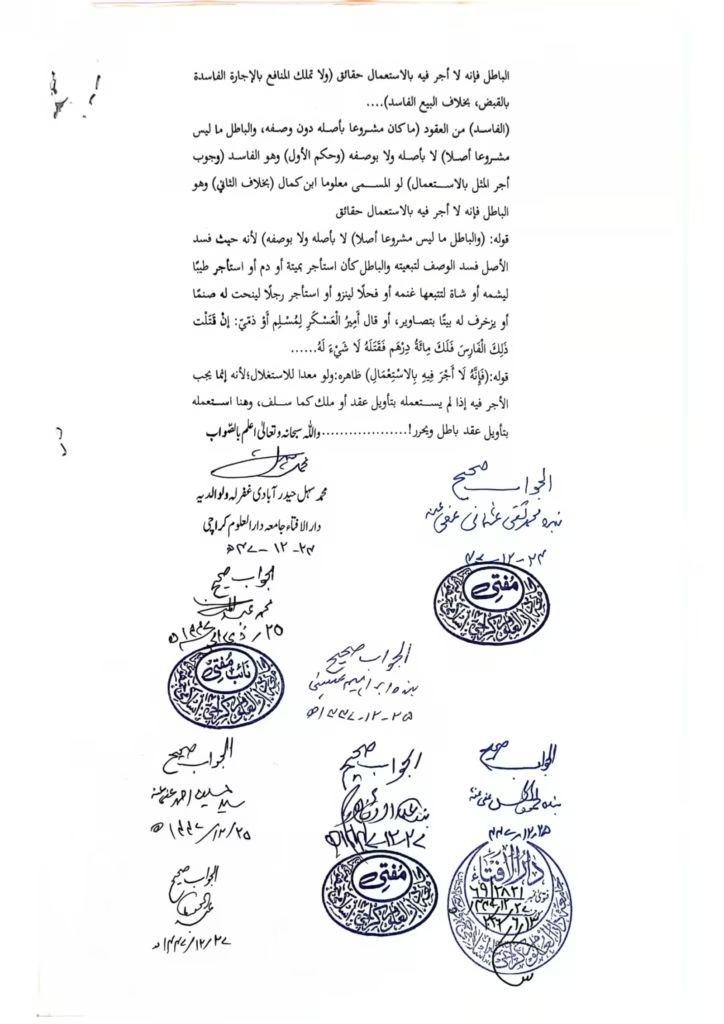
Part 2: Ruling on Acquiring Digital Courses and Digital Material
(2) — According to the research and opinions of experts so far, cryptocurrency is not considered wealth (Mal). Rather, it is merely an entry of imaginary numbers in a ledger, as described in point number (1). Therefore, in the questioned scenario, obtaining the educational course through cryptocurrency was not correct. Furthermore, since it was sent against the law, it is not permissible for you to use this course, nor is it permissible to pass it on to anyone else. Thus, it is mandatory upon you not to use this course and not to derive any kind of benefit from it. And since, according to the details mentioned in the question, this course is in digital form, which remains in the possession of the seller, you must now completely delete all material related to the mentioned course from this collection.
درر الحكام في شرح مجلة الأحكام (١/ ٥١٢):
(المادة ٤٥٩) لا تلزم الأجرة في الإجارة الباطلة بالاستعمال لكن تلزم أجرة المثل إن كان مال الوقف أو اليتيم. والمجنون – في حكم اليتيم.
لا تلزم الأجرة في الإجارة الباطلة باستعمال المأجور واستيفاء المنفعة منه ولو كان المأجور معدا للاستغلال؛ لأن الإجارة لما كانت حينئذ باطلة وغير منعقدة أصلا كان ما في ضمنها باطلا أيضا فيكون انتفاع المستأجر بالمأجور بدون عقد وهو من قبيل ما ورد في المادة ٤٧٢ (راجع المادة ٥٢) .
Durar al-Hukkam fi Sharh Majallat al-Ahkam (1/512):
“(Article 459) Rental payment (ujrah) is not mandatory in a void lease (al-ijarah al-batilah) by mere usage, but the payment of an equivalent fair price (ujrat al-mithl) becomes mandatory if it involves the property of an endowment (waqf) or an orphan. And a person with mental disability is treated under the ruling of an orphan.
Rental payment is not mandatory in a void lease by the usage of the leased asset and the full utilization of its benefits, even if the leased asset was prepared for generating revenue; because the lease at that time is void and not concluded at all, along with whatever it contains within it being void as well. Therefore, the utilization of the asset by the lessee without a contract falls under the scope of what has been stated in Article 472 (refer to Article 52).”
حاشية الطحطاوي على الدر (٨٨/١٠)
(الفاسد) من العقود (ما كان مشروعاً بأصله، دون وصفه، والباطل ما ليس مشروعاً أصلاً لا بأصله ولا بوصفه (وحُكْمُ الأول) وهو الفاسد (وجوب أجر المثل بالاستعمال) لو المسمى معلوما ابن كمال (بخلاف الثاني) وهو الباطل فإنه لا أجر فيه بالاستعمال حقائق (ولا تملك المنافع بالإجارة الفاسدة بالقبض، بخلاف البيع الفاسد).*
Hashiyat al-Tahtawi ‘ala al-Durr (88/10):
“(The Fasid/corrupt) contract is that which is lawful in its essence (asl) but not in its description (wasf), and the void (batil) contract is that which is not lawful in its essence at all, nor in its description. And (the first ruling) which is for the Fasid contract (is the obligation of an equivalent fair price upon usage) if the specified price is known, according to Ibn Kamal (contrary to the second ruling) which is for the void contract, for indeed there is no rental payment for it upon usage, according to the realities (Haqaiq). (And benefits/usufruct are not owned in a corrupt lease (al-ijarah al-fasidah) by possession, unlike a corrupt sale)…. “
Classical Jurisprudential Appendix
قوله: (والباطل ما ليس مشروعا أصلا لا بأصله ولا بوصفه لأنه حيث فسد الأصل فسد الوصف لتبعيته والباطل كأن استأجر ميتة أو دم أو استأجر طيباً ليسمه أو شاة لتتبعها غنمه أو فحلاً لينزو أو استأجر رجلاً لينحت له صنماً أو يزخرف له بيتاً بتصاوير، أو قال أَمِيرُ الْعَسْكَرِ لِمُسْلِمٍ أَوْ ذِمِّيٍّ: إِنْ قَتَلْتَ ذَلِكَ الْفَارِسَ فَلَكَ مِائَةُ دِرْهَمٍ فَقَتَلَهُ لَا شَيْءَ لَهُ……
قوله: (فَإِنَّهُ لَا أَجْرَ فِيهِ بِالِاسْتِعْمَالِ) ظاهره ولو معدا للاستغلال؛ لأنه إنما يجب الأجر فيه إذا لم يستعمله بتأويل عقد أو ملك كما سلف، وهنا استعمله بتأويل عقد باطل ومحرم!………………….والله سبحانه وتعالى أعلم بالصواب
His saying: (And the void contract is that which is not lawful in its essence at all, nor in its description) because where the essence is ruined, the description is ruined due to its dependency. The void contract is like hiring someone to carry a carcass, blood, or wine for him to smell, or a sheep to follow his herd, or a stallion to mate, or hiring a man to carve an idol for him, or to decorate a house for him with images, or if the commander of an army says to a Muslim or a Dhimmi (non-Muslim citizen): ‘If you kill that horseman, then his hundred Dirhams are yours,’ so he kills him, nothing belongs to him……
His saying: (For indeed there is no rental payment for it upon usage) Its apparent meaning is: even if it was prepared for generating revenue; because rental payment only becomes mandatory when it is used under the interpretation of a contract or ownership, as mentioned previously. But here, he used it under the interpretation of a void contract, which is futile and forbidden!
And Allah Subhanahu wa Ta’ala (Glorified and Exalted is He) knows best what is correct.
This decree underscores a highly conservative approach within Islamic finance regarding digital currencies, emphasizing that an asset must possess intrinsic, recognized value (Maliyyah) to be valid for transaction. Because the jurists conclude that cryptocurrencies—including stablecoins like USDT—amount merely to imaginary digits rather than tangible or legally recognized wealth under Shariah definitions, the underlying transactions are deemed legally void (Batil). Consequently, ownership is not transferred, and buyers are instructed to undo the transactions completely, returning physical items and permanently deleting digital goods. As the digital economy continues to evolve, this ruling serves as a vital case study on how traditional Islamic principles are applied to modern decentralized assets.
Leave a Reply
You must be logged in to post a comment.